5 Common CV Mistakes in Pakistan Cause for Rejection

Is your CV costing you interviews? Discover the 5 common CV mistakes in Pakistan and how to fix them. Get expert tips, templates, and a step-by-step guide to create a job-winning resume.
You’ve spent years building your skills, acing your exams, and gaining valuable experience. You scour job portals daily, applying to dozens of positions that seem like a perfect fit. But all you hear is silence. The problem might not be your qualifications; it might be your CV.
In the highly competitive Pakistani job market, your Curriculum Vitae (CV) is not just a document; it’s your marketing brochure, your first impression, and your ticket to an interview. A single, common mistake can cause a recruiter to discard your application in under 10 seconds. Unfortunately, many talented candidates unknowingly make these critical errors, dooming their job search before it even begins.
This ultimate guide is your intervention. We will expose the 5 most common CV mistakes in Pakistan that are likely getting your application rejected. More importantly, we will provide a detailed, step-by-step guide on how to fix them, complete with before-and-after examples. By the end of this guide, you will have the knowledge to transform your CV from a liability into your greatest asset.
Don’t let a weak CV hold you back. Find your dream job and apply with confidence on ApplyKrdo.com
Section 1: The Pakistani Recruitment Context – Why Your CV Matters
Before we dive into the mistakes, it’s crucial to understand the environment your CV operates in.
- High Volume: Recruiters in Pakistan receive hundreds of applications for a single opening. Their primary goal is to screen people out as quickly as possible.
- The 10-Second Rule: A recruiter typically spends only 10-30 seconds scanning a CV before making an initial decision. Your document must be instantly skimmable and impactful.
- ATS Systems: Many large companies and MNCs use Applicant Tracking Systems (ATS) – software that scans CVs for keywords before a human ever sees them. A poorly formatted CV gets rejected by the bot.
- Cultural Nuances: Certain practices, like including a photo and personal details, are still expected in the Pakistani context, unlike in Western countries.
Understanding this pressure-cooker environment is key to understanding why avoiding these common mistakes is so critical.
Section 2: The 5 Most Common CV Mistakes and How to Fix Them
Here are the five culprits that kill most CVs in Pakistan, along with a detailed guide on how to fix them.
Mistake #1: The “Duty List” CV Instead of an “Achievement-Based” CV
This is the most frequent and deadly mistake. Candidates simply list their job responsibilities, which tells a recruiter nothing about how well they performed.
The Mistake (Before):
- Responsible for managing social media accounts.
- Duties included customer service and handling complaints.
- Worked on increasing sales in my region.
Why It’s Bad: It’s boring, generic, and doesn’t differentiate you from every other applicant who had the same job title. It answers the “what” but not the “how well.”
The Fix: Use the STAR Method and Quantify Everything.
Turn your duties into measurable achievements. Use action verbs and numbers to showcase your impact.
- Situation: Briefly describe the context.
- Task: What was your goal?
- Action: What specific actions did you take?
- Result: What was the quantifiable outcome?
The Result (After):
- Grew social media engagement by 150% in 6 months by implementing a new content strategy.
- Improved customer satisfaction scores by 30% by resolving an average of 50+ queries daily with a 95% resolution rate.”
- Increased regional sales by 22% in Q3 2023 by acquiring 15 new key accounts.”
Pro Tip: Numbers are your best friend. They provide concrete proof of your abilities and make your CV stand out.
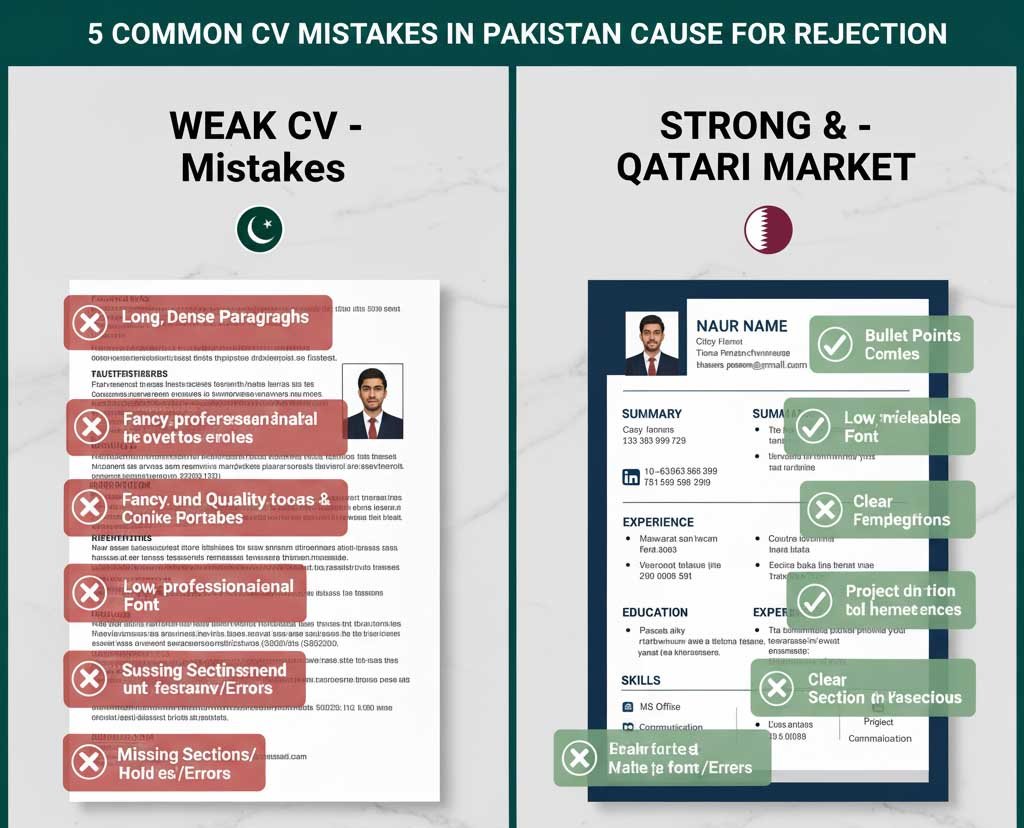
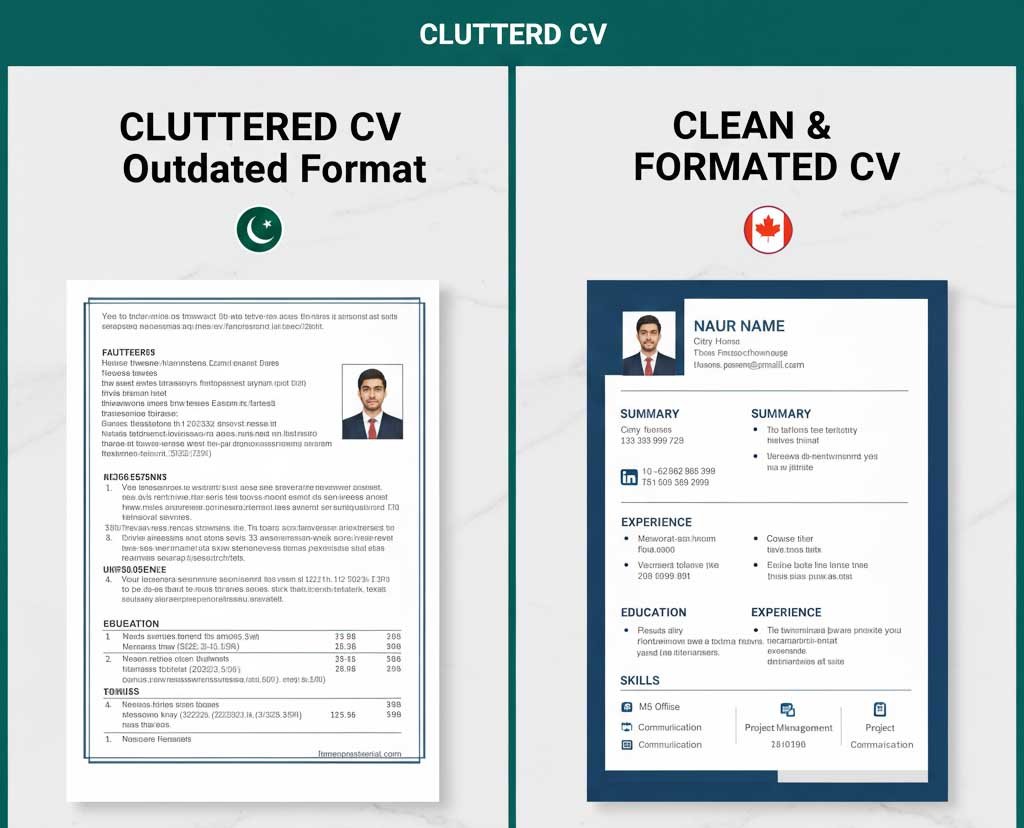
Mistake #2: Poor Formatting and Structure
A messy, cluttered CV is visually off-putting and difficult to read, guaranteeing a quick trip to the rejection pile.
The Mistake:
- Dense paragraphs of text.
- Multiple fonts, colors, and sizes.
- Unprofessional email addresses (e.g.,
coolboy123@yahoo.com). - Low-quality or unprofessional photo.
- Incorrect file format (submitting a Word document instead of a PDF).
Why It’s Bad: It shows a lack of attention to detail and professionalism. It also makes it impossible for a recruiter to find key information quickly.
The Fix: Prioritize Cleanliness and Scannability.
- Use a Clean, Single-Column Layout: Stick to one professional font (e.g., Calibri, Arial).
- Use Bullet Points: Never use long paragraphs. Use bullet points for easy reading.
- Choose a Professional Photo: Wear formal attire, use a plain background, and smile gently.
- Professional Email: Use an email based on your name (e.g.,
ali.ahmed@gmail.com). - Save as PDF: Always save and send your CV as a PDF to preserve formatting. Name the file professionally:
YourName_CV.pdf.
Mistake #3: Being Irrelevant – The “One-CV-Fits-All” Approach
Sending the same generic CV for every job is a recipe for failure. It fails to speak directly to the specific needs of the role you’re applying for.
- The Mistake: A CV that includes every single thing you’ve ever done, with no connection to the job description.
- Why It’s Bad: Recruiters are looking for a specific set of skills and experiences. If they can’t immediately see that you have them, you’ll be rejected.
- The Fix: Tailor Your CV for Every Single Application.
- Dissect the Job Description: Identify the key keywords, skills, and experiences mentioned.
- Mirror the Language: Incorporate those same keywords into your CV’s summary, skills section, and job descriptions.
- Highlight Relevant Experience: Reorder your bullet points to put the most relevant achievements for this specific job at the top of each role.
- Remove Irrelevant Info: If you’re applying for a marketing role, your unrelated summer job from 10 years ago can probably be removed to save space.
Mistake #4: Incorrect Length and Personal Details
There’s a constant debate about CV length. In Pakistan, the rules are slightly different.
The Mistake:
- For Experienced Professionals: A 4-5 page CV full of fluff.
- For Fresh Graduates: A half-page CV that says nothing.
- Personal Details: Including unnecessary information like father’s name, religion, marital status, or NIC number (unless specifically asked for in a government job application).
Why It’s Bad: Recruiters are busy. A too-long CV won’t be read. A too-short CV suggests you have no experience. Irrelevant personal details are outdated and take up valuable space.
The Fix: Follow the “Goldilocks” Rule.
- Fresh Graduates: 1 page is perfect. Focus on education, projects, internships, and relevant skills.
- Experienced Professionals (5-10 years): 2 pages is the sweet spot. Be concise and focus on recent, relevant achievements.
- Senior Executives (10+ years): 3 pages is acceptable, but ensure every line adds value.
- Personal Details: Only include your name, professional title, phone number, email, LinkedIn profile URL, and city of residence.
Mistake #5: Spelling, Grammar, and Typos
This mistake is an instant deal-breaker. It signals carelessness and a lack of professionalism.
The Mistake: Spelling errors, grammatical mistakes, and punctuation errors scattered throughout the CV.
Why It’s Bad: It tells the recruiter you didn’t care enough to proofread your own application. If you’re careless here, you’ll be careless on the job.
The Fix: Proofread, Then Proofread Again.
- Use Tools: Use grammar checkers like Grammarly or Microsoft Editor.
- Read Aloud: Reading your CV aloud helps you catch awkward phrasing and errors you might skim over when reading silently.
- Get a Second Pair of Eyes: Ask a friend, family member, or mentor to review it for you. They will catch mistakes you’ve become blind to.
Your CV is your first test. Don’t fail it before you even get in the door. Create a flawless CV with our builder.
Section 3: The Perfect Pakistani CV Template Structure
- Header: Your Name | Professional Title | Phone Number | Email | LinkedIn URL | City
- Professional Summary (3-4 lines): A powerful elevator pitch summarizing your experience, key skills, and career goals.
- Work Experience: In reverse chronological order. Use achievement-based bullet points.
- Education: Degree, University, Year, Grade. (Keep it concise).
- Skills: Categorize them (Technical Skills, Soft Skills, Languages).
- Optional (For Fresh Grads): Projects, Certifications, Awards.
Conclusion: From Mistake-Ridden to Job-Winning
Your CV is not a historical record of everything you’ve done; it is a strategic document designed to win you an interview. By avoiding these 5 common CV mistakes in Pakistan, you immediately elevate yourself above 90% of other applicants.
Remember the formula: Achievements over Duties + Clean Format + Tailored Content + Perfect Proofreading = Interview Invitation.
Take an hour today to critically review your CV against this guide. Be ruthless. Transform it from a passive list into a powerful marketing tool that showcases the unique value you bring to a company.
Your revised, powerful CV deserves to be seen by the best employers. Start your application journey today.
Browse Thousands of Jobs and Apply with Your New CV on ApplyKrdo.com