How to Find a Job in Canada from Pakistan 2025 – Advance Tips


Dreaming of moving to Canada? Our ultimate guide for Pakistani citizens reveals how to find a job in Canada from Pakistan, including visa options, NCA accreditation, resume tips, and a step-by-step action plan. Start your journey today!
For ambitious Pakistani professionals, Canada represents a land of unparalleled opportunity. With a robust economy, a welcoming immigration system, and a multicultural society that celebrates diversity, finding a job in Canada from Pakistan is a dream for many.
But the path from Karachi, Lahore, or Islamabad to Toronto, Vancouver, or Calgary can seem overwhelming. How do you navigate the Express Entry system? How can you get your Pakistani credentials recognized? What is the best way to connect with Canadian employers from thousands of miles away?
This definitive guide is your roadmap. We’ll provide a step-by-step process tailored specifically for Pakistani nationals, complete with official links, expert tips, and resources to turn your Canadian dream into a reality.
Why Should Pakistanis Consider Working in Canada?
Canada’s proactive approach to immigration makes it one of the most accessible countries for skilled Pakistanis.
- Strong Economy & High Demand: Canada faces a significant skills shortage in numerous sectors, actively seeking foreign talent to fill gaps in its workforce.
- Pathway to Permanent Residency: Unlike temporary work visas in many countries, a job in Canada is often a direct stepping stone to becoming a Permanent Resident and eventually a citizen.
- Quality of Life: Canada consistently ranks among the best countries in the world for quality of life, healthcare, education, and safety.
- Multicultural Society: Major Canadian cities are incredibly diverse. You’ll find vibrant Pakistani communities, mosques, halal food, and cultural centers, making the transition far easier.
- Rights and Protections: Canadian labor laws are strict and protect all workers, ensuring fair wages, safe working conditions, and fundamental rights.
Understanding the Canadian Job Market for Pakistanis
Success hinges on targeting the right sectors. Pakistani professionals are highly successful in these in-demand fields:
- Information Technology (IT): Software Developers, Data Analysts, DevOps Engineers, Cybersecurity Experts, and IT Project Managers are in massive demand.
- Healthcare: The need is critical for Doctors, Nurses, Pharmacists, Medical Lab Technologists, and Healthcare Aides. (Note: This requires strict licensing).
- Engineering: Civil, Mechanical, Electrical, and Software Engineers with strong credentials and experience can find excellent opportunities.
- Skilled Trades: Welders, Electricians, Plumbers, and Carpenters are highly valued and well-paid in Canada.
- Finance & Accounting: Accountants, Financial Analysts, Auditors, and Bookkeepers are always needed.
- Sales & Marketing: Professionals with experience in digital marketing, business development, and B2B sales are sought after.
Step 1: The Foundation – Credential Recognition (The Most Important Step)
This is the single biggest hurdle and the most critical step for any Pakistani professional. Canadian employers need to trust your qualifications.
Educational Credential Assessment (ECA)
An ECA is a mandatory report that verifies that your Pakistani degree, diploma, or certificate is valid and equal to a Canadian one. It is essential for most immigration programs.
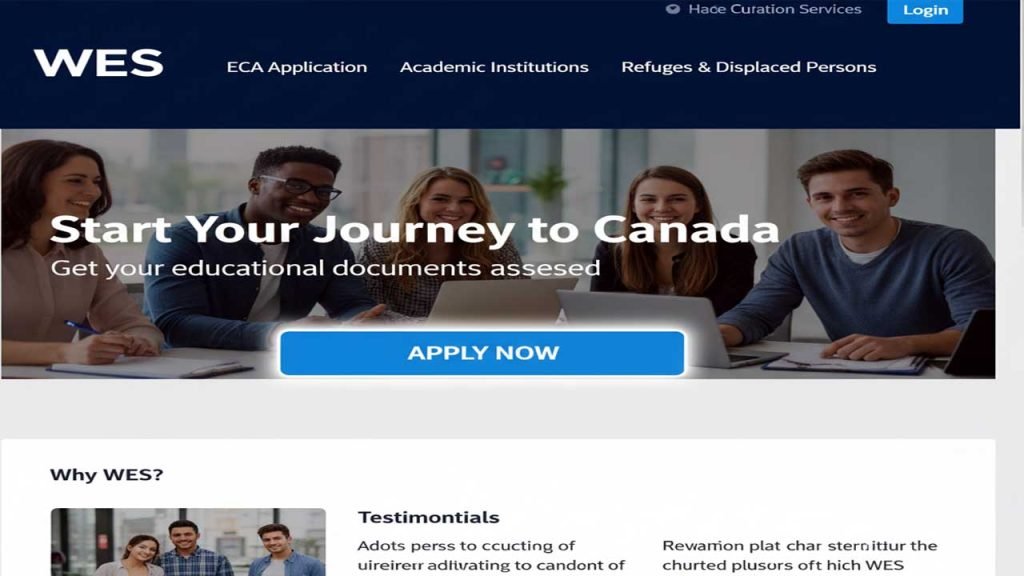
Designated Organizations: You must get your ECA from a designated organization. World Education Services (WES) is the most popular choice.
Process for Pakistanis:
- Create a WES Profile: Create an account on the WES Canada website.
- Request Academic Transcripts: Contact your university in Pakistan and request they send your attested transcripts and degree copies directly to WES in a sealed envelope. This is a crucial step—WES will not accept documents sent by you.
- Pay the Fee: Submit payment online to WES.
Professional Licensing and Accreditation
For regulated professions (e.g., medicine, engineering, law, nursing), an ECA is not enough. You must be licensed by the provincial regulatory body.
- For Engineers: You must contact Engineers Canada and go through the process to become a Licensed Professional Engineer (P.Eng.).
- For Doctors: The process is lengthy and involves passing exams through the Medical Council of Canada (MCC).
- For Lawyers: You must contact the provincial law society (e.g., The Law Society of Ontario).
Start this process early—it can take months or even years!
Step 2: Understanding Your Visa Options
You typically need a job offer to get a work permit. Here are the main pathways for Pakistanis:
Express Entry (The Primary Pathway)
This is not a job offer system but a points-based system for Permanent Residency. A job offer gives you massive bonus points, but it’s not always mandatory for high-scoring candidates.
- How it works: You create an online profile and are ranked based on your age, education, work experience, and language skills.
- The goal: Get an Invitation to Apply (ITA) for PR.
Employer-Specific Work Permit
This is the most common way to find a job in Canada from Pakistan. A Canadian employer must give you a job offer and obtain a Labour Market Impact Assessment (LMIA). The LMIA proves that no Canadian citizen or permanent resident could fill the job.
- Process: The employer applies for the LMIA. Once approved, you use that document to apply for your work permit.
LMIA-Exempt Work Permits (International Experience Canada IEC)
The IEC program allows youth from partner countries (including Pakistan) to work in Canada temporarily. While Pakistan is not a formal partner, many Pakistanis use recognized organization (RO) pools to participate.
- Official Link: International Experience Canada
Step 3: Crafting a Canadian-Style Resume and Cover Letter
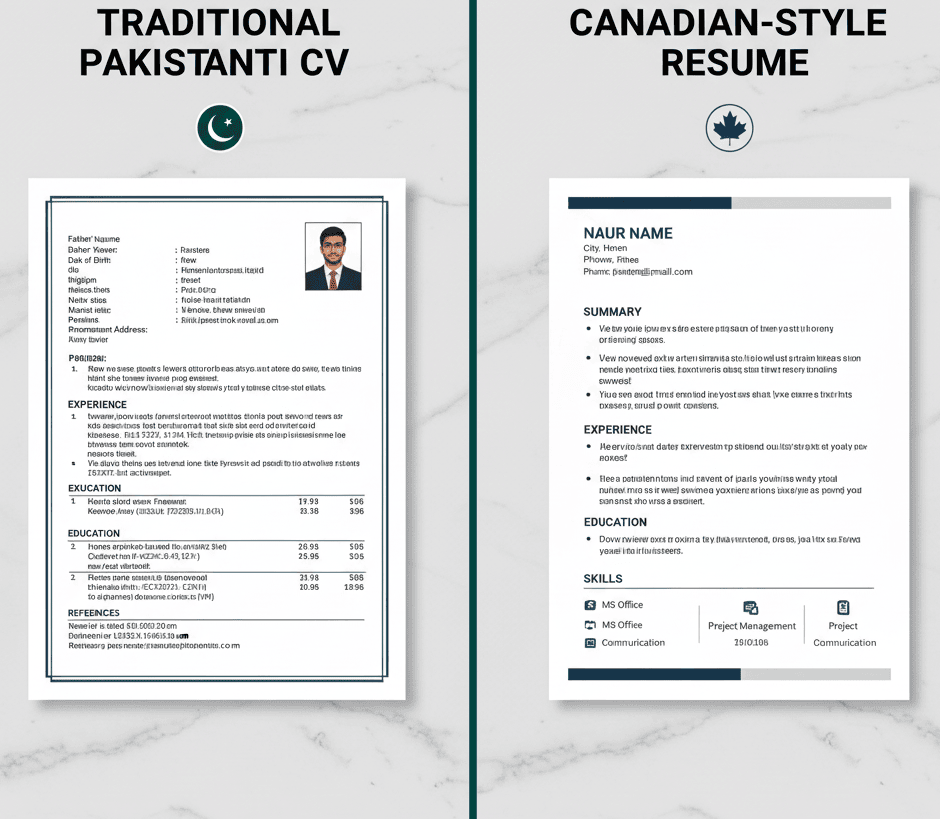
Your Pakistani CV will not work. Canadian resumes have a different format and expectations.
Key Differences of a Canadian Resume:
- No Photo, No Personal Details: Do not include your photo, date of birth, marital status, or father’s name. This is to prevent discrimination.
- Reverse Chronological Order: List your most recent experience first.
- Length: Keep it to a maximum of two pages.
- Achievement-Oriented: Use bullet points and action verbs. Quantify your achievements (e.g., “Increased website traffic by 25%,” “Managed a budget of $50,000”).
- Keywords: Tailor your resume for each job application by using keywords from the job description. Many companies use Applicant Tracking Systems (ATS) to screen resumes.
Your Cover Letter: Must be tailored for each application. Explain why you are a good fit for that specific company and role. Address your right to work in Canada (e.g., “I am eligible for an LMIA-based work permit…”).
Does your resume meet Canadian standards? Use our ATS-Optimized Resume Checker to create a professional, Canadian-style resume in minutes.]
Step 4: The Job Hunt – Where to Look for Opportunities
You must be strategic. Here’s where to find legitimate job offers.
Major Canadian Job Boards
- LinkedIn: The #1 platform. Set your location to a Canadian city, optimize your profile with keywords, and start connecting with Canadian recruiters.
- Indeed Canada: The largest aggregate job board.
- Job Bank: The Canadian government’s official job board. It’s also a key tool for Express Entry.
- Workopolis: A well-known Canadian job site.
Networking: Your Most Powerful Tool
In Canada, it’s often who you know. This is crucial for applicants from Pakistan.
- Reach out to Recruiters: Find recruiters in your industry on LinkedIn and send a polite, personalized connection request.
- Join Professional Associations: Become a member of Canadian associations in your field (e.g., PMI for project managers).
- Leverage Your Alumni Network: Connect with alumni from your Pakistani university who are now in Canada.
- Use Facebook Groups: Join groups like “Pakistanis in Toronto” or “Software Developers Canada” for informal leads and advice.
Targeted Company Applications
Research companies in your field that have a history of hiring internationally. Larger companies are often more willing to sponsor LMIA processes.
Step 5: Acing the Virtual Interview
Your first interview will almost certainly be virtual.
- Technology: Test your internet connection, webcam, and microphone beforehand. Use a professional background.
- Time Zones: Canada has multiple time zones. Confirm if the time is Eastern Time (ET), Pacific Time (PT), etc.
- Behavioral Questions: Be prepared for questions starting with “Tell me about a time when…” Use the STAR method (Situation, Task, Action, Result) to structure your answers.
- Research: Know the company’s mission, values, and recent projects.
- Questions to Ask: Have intelligent questions ready for the interviewer about the role, team, and company culture.
Step 6: After the Job Offer – The Final Steps
Congratulations! The hard work pays off. Now, your employer will guide you through the final stages:
- Sign the Employment Contract: Review it carefully—salary, benefits, job title, and responsibilities.
- LMIA Application (If applicable): Your employer will apply for the LMIA.
- Work Permit Application: Once the LMIA is approved (or if it’s an LMIA-exempt role), you can apply for your work permit online through the IRCC portal.
- Biometrics and Medical Exam: You will need to give your biometrics (fingerprints and photo) at a Visa Application Centre (VAC) in Pakistan. Some jobs require a medical exam.
- Passport Request & Stamp: If approved, IRCC will request your passport to affix the work permit visa.
- Prepare for Landing: Book your flight and plan your initial stay. Your employer may offer relocation support.
Final Words of Advice
Finding a job in Canada from Pakistan requires patience, persistence, and preparation. Start with credential recognition, build a Canadian-style profile, and network relentlessly. The Pakistani community in Canada is your greatest asset don’t hesitate to seek guidance.
Your future in Canada is waiting.